
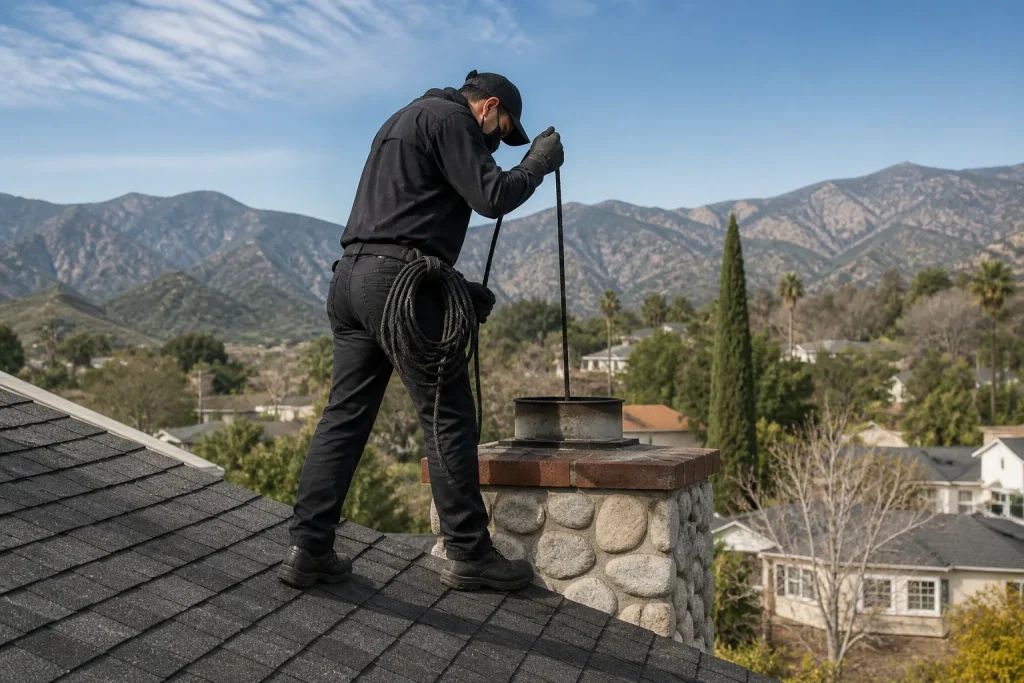
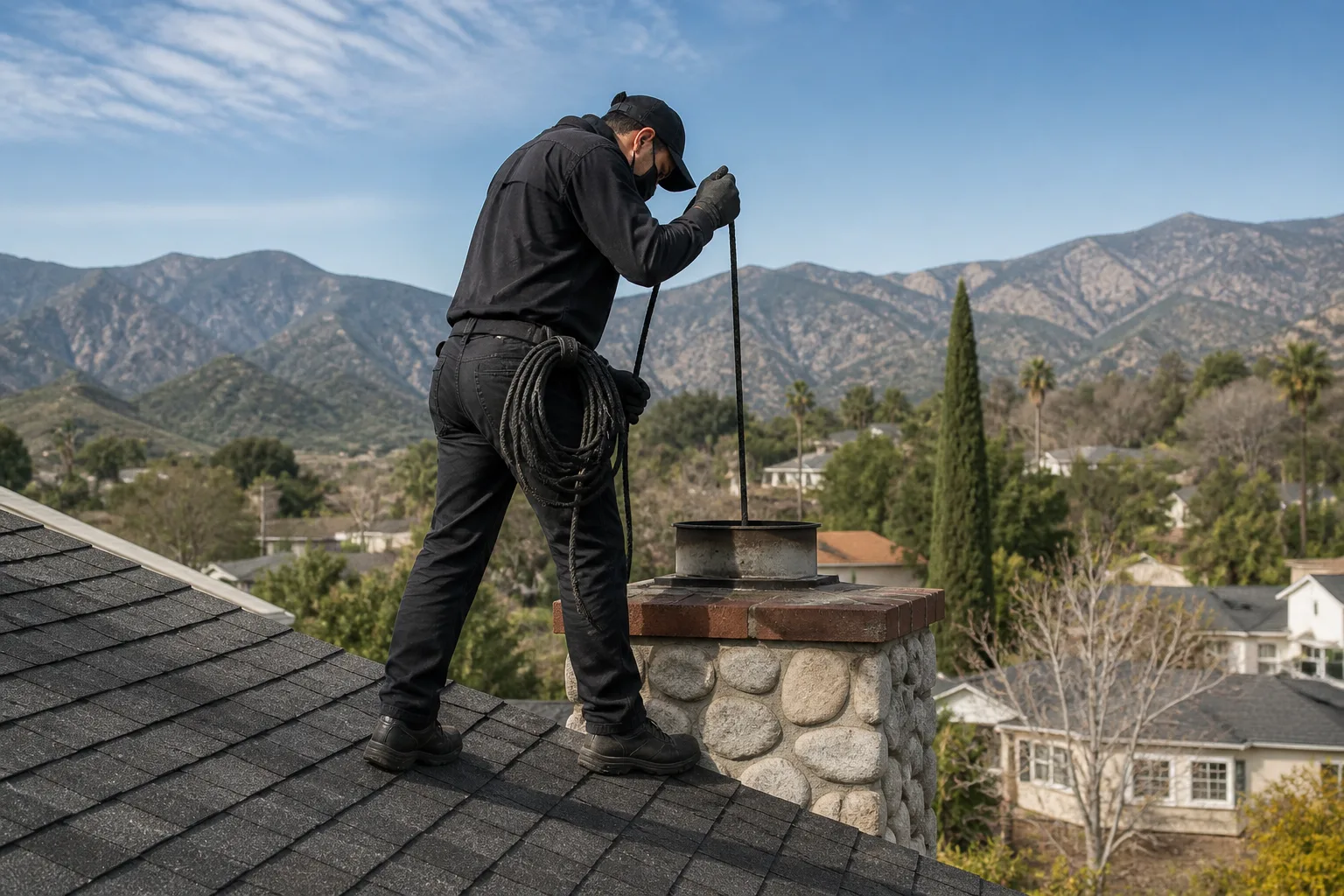
Gelco Chimney Sweep in Tujunga: A Homeowner’s Guide
When a chimney company’s name appears on a service sticker inside the firebox of a home you just bought, the first question isn’t “are they good” – it’s “what exactly did they do, and is there a record of it?” In Tujunga, where a lot of housing is older and fireplaces were built to work hard through the cooler months, that sticker often raises more questions than it answers. This guide is about evaluating any established local sweep, Gelco included, and knowing what a real full-system visit should cover. If you’d rather not sort through it alone, call (844) 968-2733 and we’ll talk it through with you.
What does “Gelco” actually tell you as a Tujunga homeowner?
Gelco is a name many Tujunga homeowners recognize from chimney caps and accessories, and that’s a useful starting point – it means the hardware on your flue is a known professional-grade product rather than a generic hardware-store cover. But a brand name on a cap doesn’t certify the sweep who installed it, and it doesn’t tell you what was inspected, cleaned, or repaired during the visit. That’s the gap most people are actually trying to close.
Our approach is to treat the brand as one signal among several. In Tujunga, where homes sit against the foothills and wildlife pressure is real, a fitted Gelco or Famco cap is often the difference between a clean flue and a nest of debris blocking it. We work with those caps because they’re manufactured to fit, not bent to fit. But we also document what’s under them.
What should you look for when evaluating any sweep who left a sticker in your firebox?
- A written service record. What was swept, what was inspected, and what was noted as a future concern. A sticker alone is marketing, not a record.
- Scope clarity. Did the visit include a flue inspection, or just a brush and a vacuum?
- Repair capability. Can that company handle a cracked crown or a damaged liner, or do they hand you a referral?
- Material names. DuraFlex liners, HeatShield resurfacing, Copperfield components – professional-grade materials get named because they’re specified, not improvised.
If you can answer those four questions, you know what the previous sweep actually did. If you can’t, it’s worth a fresh inspection before the burning season.
How do you tell whether a previous sweep in Tujunga was thorough?
A thorough sweep leaves you with a written report and a clear understanding of your system’s condition – not just a clean firebox. In our experience, the tells are in what the technician measured and recorded, not in how tidy the hearth looks afterward.
Here’s what a proper post-service report should include:
- Flue condition and clearance. Notes on the liner’s condition, any visible cracks, gaps, or deterioration, and whether the flue is appropriately sized for the appliance.
- Creosote level and location. Where it accumulated and how much – stage one, two, or three – because that drives whether a sweep is routine or urgent.
- Crown and cap assessment. Cracks in the crown, condition of the cap, and any signs of water intrusion around the flue.
- Firebox and damper notes. Masonry condition, damper operation, and any gaps that affect draft.
- Photos where relevant. A photo of a cracked crown or a degraded liner joint tells you more than a paragraph of description.
The most common gap we find in Tujunga homes is a report that covers the flue but skips the crown and cap entirely. Those are the two components most often responsible for water damage and wildlife entry, and if they weren’t assessed, the sweep was incomplete even if the brushing was fine.
Why continuity matters for older Tujunga masonry systems
A sweep who knows your system’s history catches changes a first-time technician might miss. That’s not a sales pitch for loyalty; it’s how masonry behaves. Chimney systems in Tujunga’s older housing stock often show slow, incremental changes – a hairline crown crack that widens over a couple of seasons, a liner joint that loosens, a firebox mortar that starts to recede. Each of those is minor on its own. Together, over time, they change how the system drafts and where water gets in.
A technician seeing the system for the first time is evaluating it against general standards. A technician who saw it last season is comparing it against a baseline. The second is more useful, and it’s the reason we document every inspection, not just the ones where we find something wrong.
This matters most for homes with original masonry chimneys and for fireplaces that see heavy winter use. If you’ve had a Gelco cap installed by a sweep you’re no longer using, that’s not a reason to ignore the system – it’s a reason to get a fresh documented baseline.
Related services in Tujunga: chimney inspection before the burning season, and chimney repair when the report turns up something structural.
What does full-system chimney service look like versus a sweep-only visit?
Full-system service covers the components that actually determine whether your chimney is safe to use; a sweep-only visit covers soot removal. Both have a place, but they answer different questions.
A sweep-only visit answers: is the flue clear enough to draft? A full-system visit answers: will this system still be safe next winter, and what needs attention first?
The components that change the safety outcome:
- Flue liner. The barrier between combustion gases and the masonry. A degraded liner is where carbon monoxide risk becomes real, and it’s not visible from the firebox.
- Crown. The concrete cap at the top of the masonry. Cracks here let water into the chimney structure, which is the most common cause of slow masonry failure.
- Cap. The fitted cover on the flue. Its job is keeping rain, debris, and animals out – a loose or missing cap in Tujunga’s foothill setting invites all three.
- Firebox and damper. Where the fire actually happens. Cracks and gaps here matter for both safety and draft.
- Connections and joints. The seams that hold the system together, and the first place deterioration shows.
We find that homeowners who ask “is my chimney safe” are almost always asking about the first four, not the soot. That’s a full-system question, and it deserves a full-system answer. For the cleaning side of the work, our Chimney Sweep Tujunga page covers the routine visit; for the structural side, chimney cap & crown work is where most water-intrusion problems get resolved.
How does in-house repair capability change the picture?
When an inspection turns up a problem, the difference between a sweep and a full-system company is what happens next. A sweep-only company refers you out. A full-system company addresses the finding on the same visit or in a clear follow-up scope – and you don’t have to re-explain your chimney to a second contractor.
That continuity matters more than it sounds. Hand-offs mean a second walkthrough, a second set of diagnostic decisions, and sometimes a second interpretation of the same evidence. We’ve seen enough referral chains to know they slow things down and occasionally lose detail along the way.
What full-system service looks like in practice:
- Chimney sweep – the routine cleaning and creosote removal.
- Chimney inspection – documented assessment of liner, crown, cap, firebox, and draft.
- Chimney cap & crown – installation and repair of the components most exposed to weather and wildlife.
- Chimney repair – structural and component-level fixes, including HeatShield resurfacing for liner rehabilitation.
- Fireplace repair – fireplace repair for the firebox, damper, and hearth-side components.
HeatShield resurfacing is worth flagging because it’s beyond the scope of a standard sweep. It’s a liner rehabilitation method, and having it available means a deteriorating liner isn’t automatically a full replacement decision. We’re trained in its application, and we specify DuraFlex for liner work where replacement is the right call.
When to call a pro
Some signs should push a Tujunga homeowner to pick up the phone rather than wait for the next scheduled visit. We answer 24/7 and dispatch Sunday through Friday, 7am to 7pm.
Call a professional if you notice:
- Strong creosote smell or visible soot flakes inside the firebox or on the damper.
- Smoke rolling back into the room when the fire is lit – a draft problem that can indicate a liner or blockage issue.
- Water staining on the chimney breast or ceiling near the flue.
- Visible cracks in the crown when you look at the chimney from outside.
- Animals or nesting debris near or inside the flue.
Our technicians have up to 9 years of experience, and we’ve learned that the calls that matter most are the ones made early rather than the ones made after a problem has had a season to worsen.
The Bottom Line
If you’re searching for a Gelco chimney sweep in Tujunga, the name on the cap is a good starting signal but not the whole answer. What matters is the record of the work, the scope of the inspection, and whether the company can act on what it finds. A full-system visit that documents liner, crown, cap, firebox, and connections is worth more than a clean firebox and a sticker. And when something turns up, you want a company that can fix it, not one that refers it.
If you’re in Tujunga and need help, Chimney Sweep Tujunga offers free estimates – call (844) 968-2733. We answer 24/7. Fast dispatch from 7am to 7pm, Sunday through Friday. The estimate is free and the price is set per job by the written estimate, so you’ll know the scope before any work begins. Our chimney sweep page covers the routine visit in more detail if that’s where you want to start.
Frequently Asked Questions
No, a specific brand isn’t required, but you do need a cap that’s fitted to your flue – not a generic cover. We work with Gelco and Famco because both are manufactured to fit and hold up in foothill conditions. A poorly fitted cap is one of the most common causes of water intrusion and wildlife entry in Tujunga homes. Call (844) 968-2733 for a free estimate on a fitted cap.
Check for a written report that covers the flue liner, creosote level, crown, cap, firebox, and damper. If the report only mentions the flue, the crown and cap likely weren’t assessed, and those are the two components most responsible for water damage. A photo record of any noted concern is the clearest sign of a thorough visit. Call (844) 968-2733 if you’d like a fresh inspection to establish a baseline.
Yes, if the company has in-house repair capability. Sweep-only companies hand you a referral when something comes up; a full-system company addresses the finding on the same visit or in a clear follow-up scope. We handle sweep, inspection, cap and crown work, chimney repair, and fireplace repair under one roof, including HeatShield liner resurfacing and DuraFlex liner installs. Call (844) 968-2733 and we’ll scope it for you.
Most chimneys benefit from an annual inspection and a sweep when creosote buildup warrants it. Homes with heavy winter fireplace use may need more frequent attention. The right interval depends on your system’s condition and how much you burn, which is why documentation from visit to visit is so useful. Call (844) 968-2733 for a free estimate and we’ll talk through what your system actually needs.
Written by the team at Chimney Sweep Tujunga.
Need Chimney Cleaning Help?
Call Chimney Sweep Tujunga - the local pro we connect you with is licensed and insured, with free written estimates in Tujunga.
(844) 968-2733